
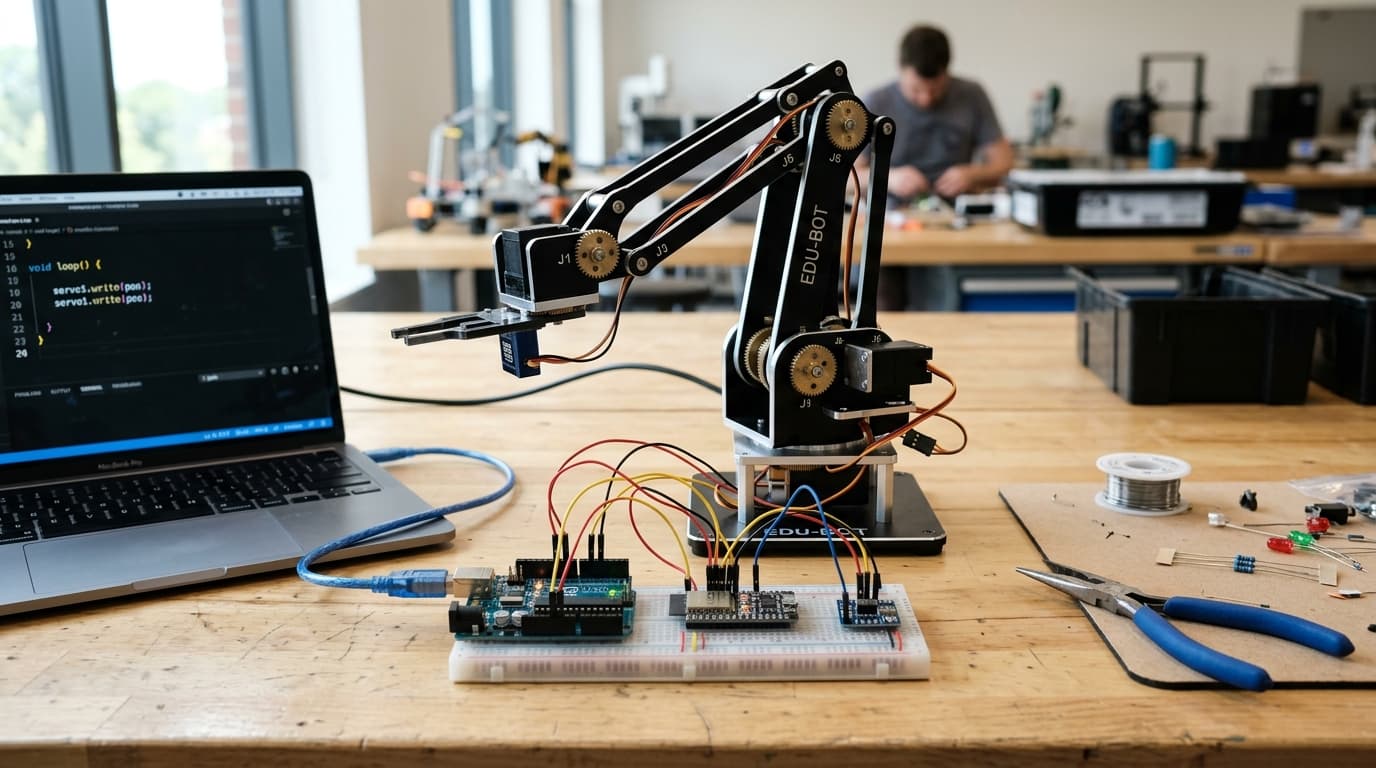
TECH7 STEM & ROBOTICS
Empowering Zimbabwe's Next Generation of Innovators and Engineers.
An Institutional Brief & Implementation Guide for School Administrators and Educators • Aligned with Education 5.0 & ZIMSEC
Bridging Conventional Computer Theory and Practical Engineering
The Tech7 Initiative is an applied STEM, electronics, and robotics framework designed for primary and secondary educational institutions. The program empowers learners to become active builders, inventors, and problem solvers.
Aligned directly with Zimbabwe’s Heritage-Based Education 5.0 philosophy and the ZIMSEC ICT & Science curricula, Tech7 equips students with the technical skills needed to prototype solutions for real-world challenges in agriculture, energy, environmental management, and everyday automation.
The Tech7 Curriculum Framework
A comprehensive engineering matrix spanning discrete circuitry to autonomous robotics and green energy.
Applied Electronics
Circuit design, breadboarding, discrete components
Power supplies, LED indicators, relay switching
Microcontroller Computing
Development boards (Arduino, ESP32, micro:bit)
Embedded logic, pin controls, input/output processing
Coding & Logic
Block-based coding (Scratch) graduating to C++ and Python
Sensor algorithms, conditional triggers, automation
Robotics & Actuation
DC motors, servo mechanics, autonomous chassis
Line followers, obstacle-avoiding rovers, robotic arms
Smart Systems & IoT
Wireless telemetry (Wi-Fi / Bluetooth), remote sensors
Soil moisture alerts, weather stations, smart security
Green Tech & Solar
Photovoltaics, energy storage, power efficiency
Solar-powered chargers, automated irrigation rigs
Design & Presentation
Prototyping, mechanical layout, project defense
Science exhibitions, local community innovation pitches
Standard Hardware & Learning Kits
Structured according to learner grade level and experience. Durable, safe, low-voltage educational silicon.
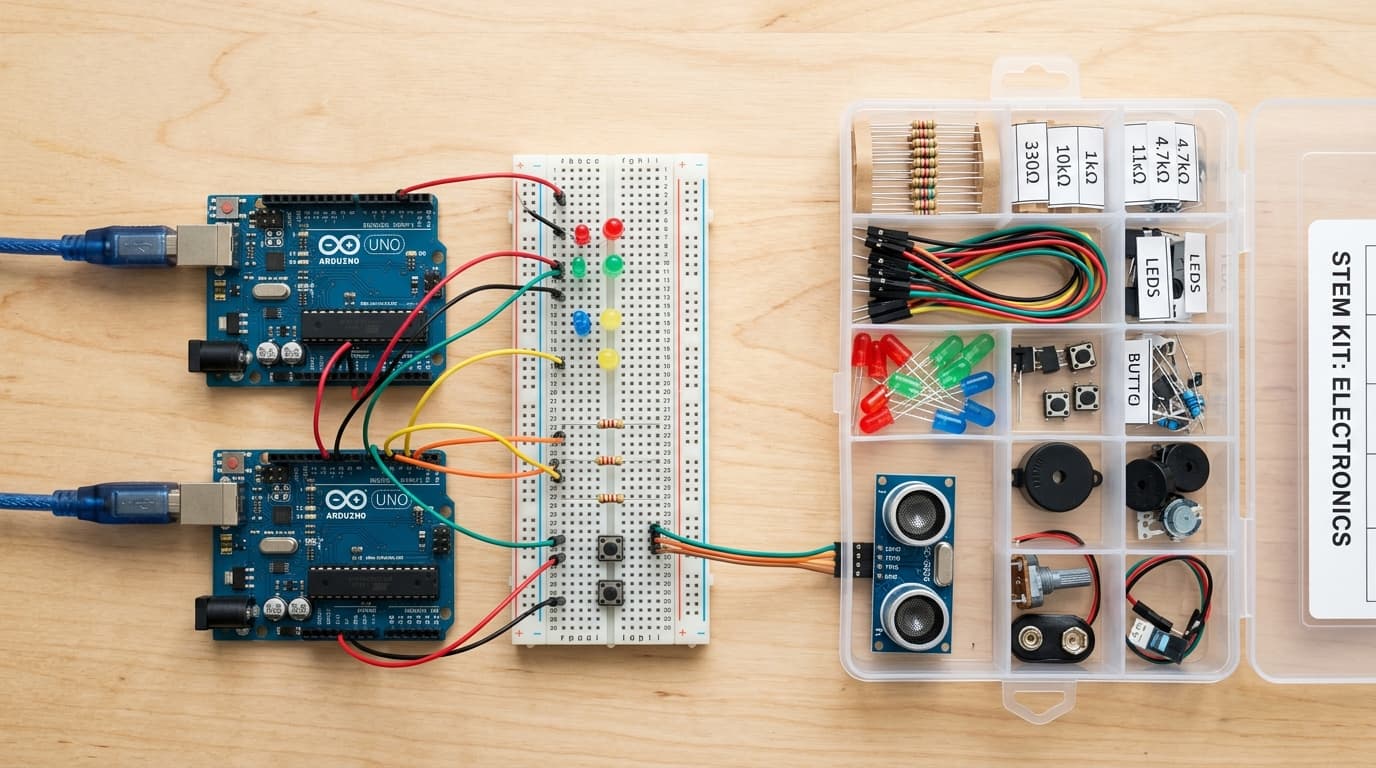
Foundations & Circuit Starter Kit
Microcontroller board (Arduino-compatible), mini solderless breadboards, tactile switches, multi-color LED arrays, light-dependent resistors (LDRs), buzzers, ultrasonic distance sensors, and jumper leads.
Night-light automation, digital distance alarms, pedestrian traffic lights, and moisture indicators.
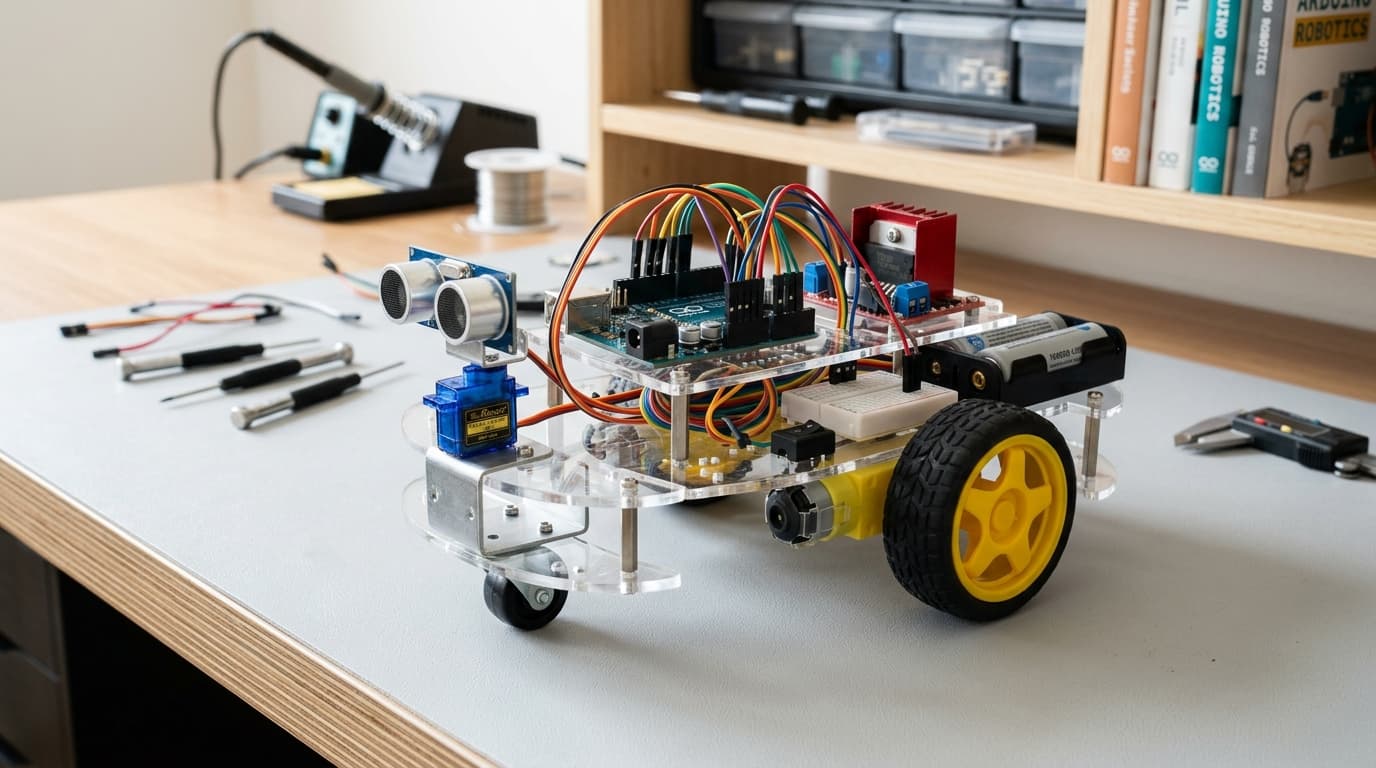
Autonomous Robotics & Rover Kit
Multi-tier robotic chassis, dual gear motors and wheels, H-bridge motor driver, ultrasonic distance sensor with pan servo mount, infrared line-tracking modules, and rechargeable battery holders.
Autonomous obstacle-avoiding rover, warehouse line-follower robot, and automated maze navigator.
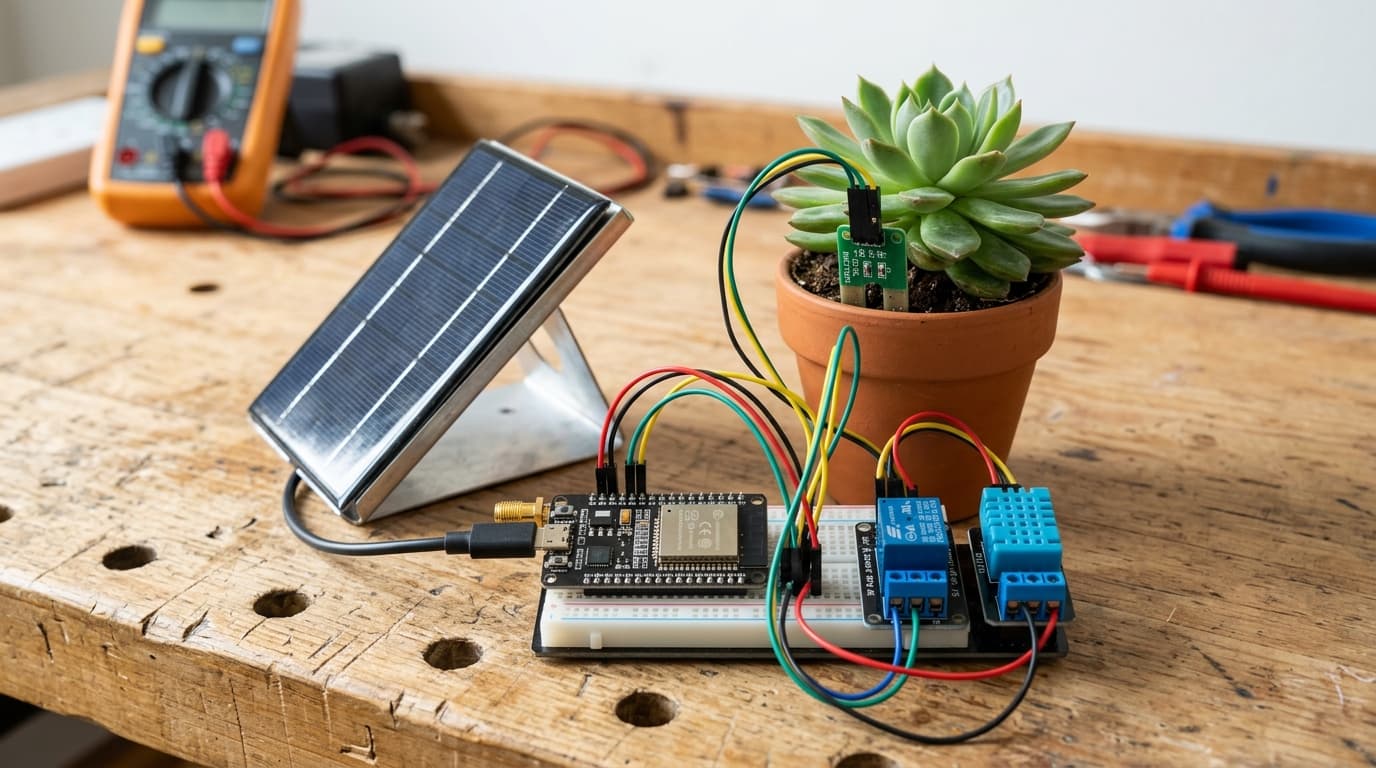
Smart Systems & IoT Expansion Pack
Wi-Fi/Bluetooth enabled microcontroller (ESP32), DHT11 temperature/humidity sensor, soil moisture probes, relay modules (for controlling 220V/mains appliances safely), and mini solar PV panels.
Automated garden drip irrigation, automated classroom energy management, and smart security alarms.
Flexible School Delivery Models
Schools can adapt Tech7 according to their timetable and existing infrastructure.
After-School Innovation Club
Weekly practical club sessions where learners work in teams on progressive builds leading toward termly exhibitions.
Dedicated STEM / Robotics Lab
Outfitting existing computer or physics labs with standardized tool sets, component organizers, and test benches.
Curriculum Integration (ZIMSEC)
Structured lab workbooks and teacher guides designed to satisfy compulsory practical project criteria in ICT and science subjects.
Institutional Implementation Roadmap
| Phase | Key Activities & Milestones |
|---|---|
| Phase 1: Planning | Institutional Assessment & PlanningEvaluate school lab facilities and determine cohort size. |
| Phase 2: Delivery | Hardware Delivery & Kit AllocationDistribute student build packs, component organizers, and manuals. |
| Phase 3: Alignment | Instructor Alignment (Flexible)Leverage Tech7 facilitators directly or conduct internal Train-the-Trainer sessions for resident ICT/Science staff. |
| Phase 4: Launch | Club Launch & Hands-on Build CyclesPractical sessions covering electronics basics to complete robotic systems. |
| Phase 5: Showcase | Termly Innovation ShowcaseStudents demonstrate operating prototypes to peers, parents, and school leadership. |
Institutional Benefits
Engineered for seamless adoption in Zimbabwean schools.
Zero Infrastructure Overhead
Operates on safe low-voltage DC batteries or standard USB power from existing PCs.
Practical ZIMSEC Alignment
Equips students with real engineering intuition and coding needed for ICT coursework.
Pre-Tested, Safe Hardware
Curated for educational resilience, eliminating frustrating component mismatches.
Student Recognition
Prepares learners to represent the school in national science fairs and robotics expos.
Estimated Implementation Costs
Accessible, scalable financial structure designed for educational institutions.
Full access to curriculum materials, guided build cycles, and club facilitation support.
Comprehensive 3-day intensive workshop, completion certification, and ongoing instructional guides.
Learning Starter Kits are provisioned as part of the core implementation roll-out at no separate hardware purchase cost to the school.
Schedule a Live Kit Demonstration
Schools interested in inspecting physical kits, scheduling a live robotics assembly demonstration, or requesting formal quotations may contact our program desk.